In La Nina Times or Not … Be Sure Not to be Caught Short on your next Outdoor Adventure
We are often asked “How should I prepare for my walk?” In this short article we share our thoughts on how to prepare and what to wear to have a great day. Keep these tips in mind, and the vagaries of weather should not foil your enjoyment of time in nature!
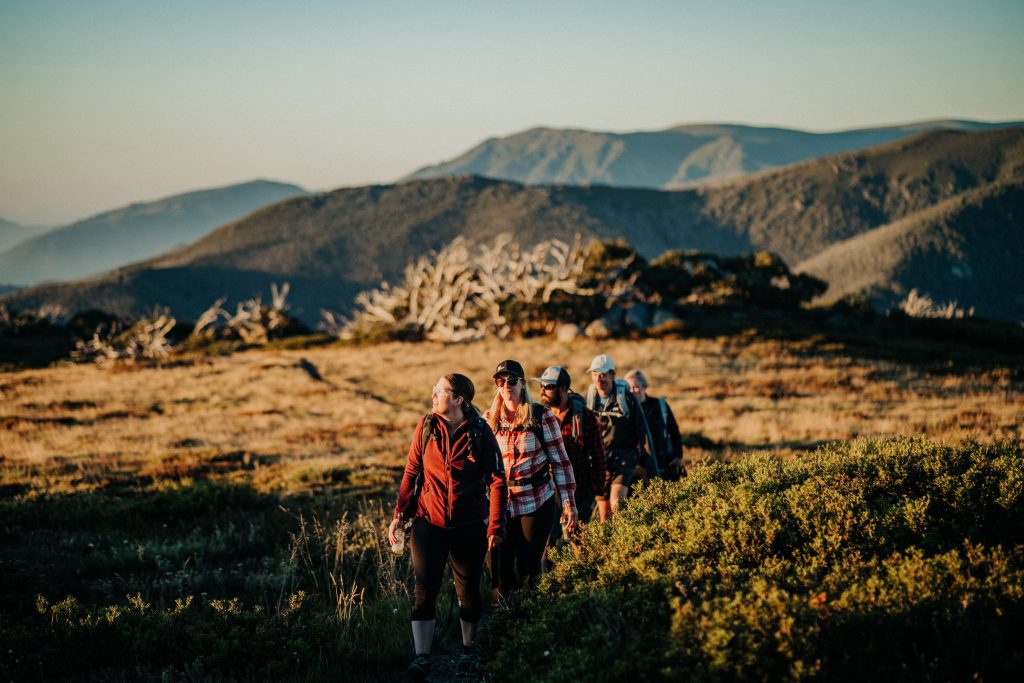
Preparing for Your Walk
So you are all excited about getting out and about on a trail. However, the one thing we know and love about nature, is that it can be unpredictable. Particularly in these times of La Nina which are seeing unpredictable and dramatic weather events across Australia. You need to prepare for the unexpected. Many of us have heard the old adage “no such thing as bad weather, just bad clothing” or bad planning. That’s why the clothes you wear while hiking will impact your comfort and safety.
If you’re planning your trip, you may also find our guide on how to prepare for a multi-day walking holiday in Australia helpful.
In this short article we look at how best to dress to have a great day on the trail, even with a few surprises from mother nature. While specific garments are a matter of personal choice, some types of garments will offer more flexibility, safety and comfort. With the right range of clothes, you’ll be comfortable in any conditions. So here’s an overview (see our Get Hiking Ready article for more details) to help you choose the right hiking clothes for you before hitting the trail.
Walking Pants or Shorts
Whether you walk in pants or shorts will depend on the conditions that you’ll be hiking in and your own personal preference. Shorts are cooler to walk in, while pants are warmer and can help protect your legs from insects and from scratches in scrubby conditions. Outdoor shops sell purpose-designed hiking shorts and pants (as well as pants that zip down to shorts) which offer comfort, flexibility of movement and good pocket design.
If you’re after a cheaper option, make sure you choose choose a garment made from a lightweight synthetic fabric such as polyester or nylon rather than cotton. Synthetics are lightweight, sturdy and don’t hold on to water, keeping you drier than fabrics such as cotton – and of course if you do get wet they dry out fast.
Wear a Cool Top in Warm Conditions
You’ll need a lightweight top to keep you cool in warm conditions (and for when you warm up while hiking uphill). A lightweight synthetic top is best as it will keep you cool and dry. A cotton shirt or t-shirt is not ideal as it will hold on to water – it will get sweaty and stay sweaty. When you stop walking and cool down, it may be uncomfortable, damp and chilly. This can expose you to risks of weather exposure.
Singlet tops are best avoided – they expose your shoulders to the sun and are not very comfortable with backpack straps. Your cool lightweight top will form the base layer upon which you can build additional layers for optimal comfort.
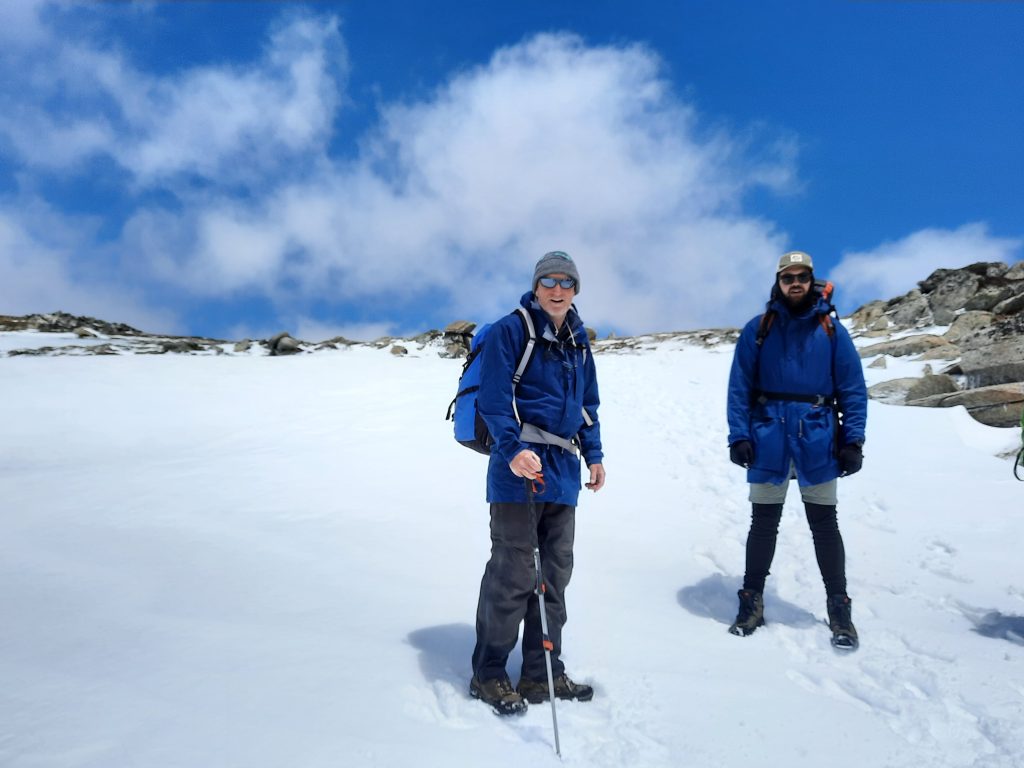
Tops for Warmth in Cool Conditions
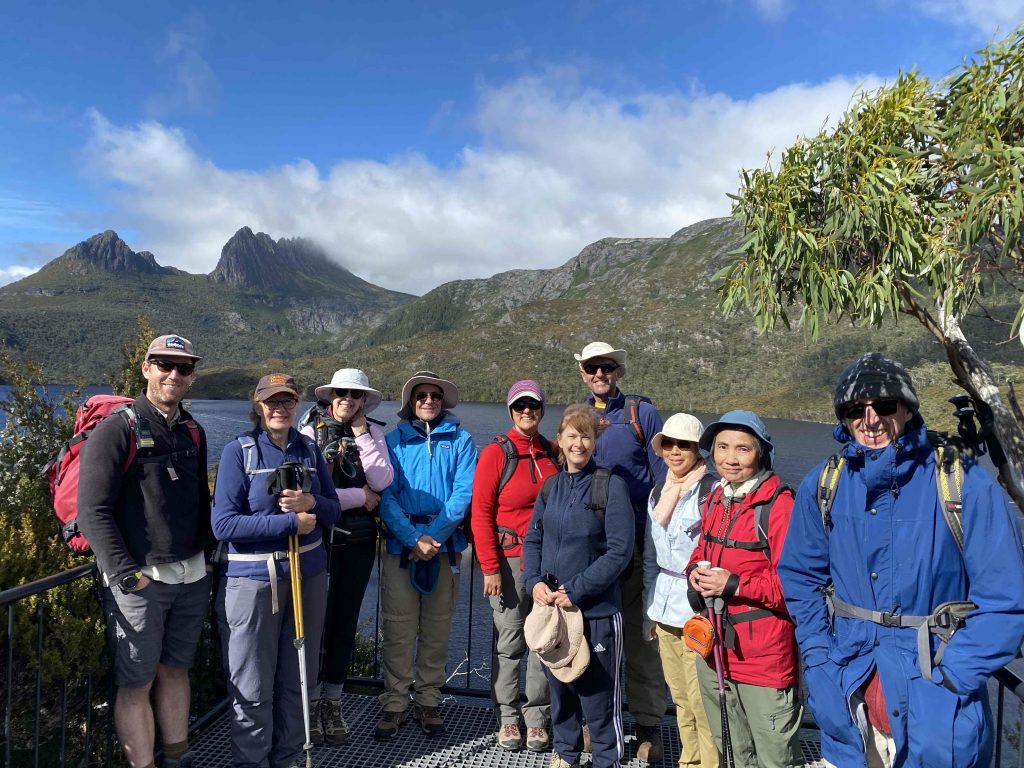
You will need a warm long-sleeve top such as a fleece or down top to keep you warm. Depending on conditions, you may need another warm layer as well. For example, if you’re on one of our Cradle Mountain Tours, it may be better to wear two or more lighter-weight warm layers rather than one heavy warm layer. The extra layers add versatility and the layering traps warm air, keeping you better insulated. It gives you the flexibility to layer up or down as your temperature or the weather changes, helping you to stay comfortable in wide range of conditions. In any event these tops and additional layers should be light and can be easily stowed in your day pack when not required.
The Importance of Thermals
A good set of thermals is a great investment if you plan on doing a bit of hiking. Thermals are worn as an under layer in cold conditions. They are generally lightweight and keep you warm and they also wick moisture away from your body, keeping you dry and comfortable. Consider polyester or merino fabrics – merino is less smelly after walking than polyester. There are some terrific Australian and New Zealand manufacturers of quality merino tops and pants, and while they can be a little more expensive they are often a worthwhile investment.
The Importance of a Good Quality Rain Jacket
And then when the heavens do open, a good raincoat will be essential for hiking. A raincoat will also add a further layer for warmth, and it provides a wind block and a rain block. The best hiking raincoats are made from waterproof and breathable fabrics such as Gore-Tex. These fabrics allow vapour moisture (sweat) to escape through the fabric, keeping you more comfortable.
Even if you don’t have a breathable-fabric raincoat, some kind of waterproof raincoat is a hiking essential. You should always be prepared for weather changes and carry a raincoat in your hiking day pack. You can explore quality Australian made rain jackets to buy or hire from our partner, OnePlanet.
Ponchos may be suitable in urban environments, however they are not suitable out on the trail.
Waterproof Pants
If you expect to be hiking full days in cool or wet conditions or in alpine conditions, then it is worth considering having a pair of waterproof pants. Waterproof pants aren’t essential for a lot of day walking in normal conditions, however in cool and cold conditions they will provide protection from the elements and the risks associated with exposure.
Like a good raincoat, the best waterproof pants are generally made from waterproof and breathable fabrics like Gore-Tex. These fabrics allow moisture (sweat) to escape through the fabric, keeping you more comfortable, while still protecting you from external moisture.
Hiking Shoes and / or Boots
Not surprisingly, picking the right footwear for your trek is critical to comfort. The type of footwear you select should also be suited to the terrain you will be walking in and the level of ankle support you require. For irregular and lose trails a full boot with ankle support is preferable, while a lower profile (trail running style shoe) may be more suitable for less irregular terrain.
Perhaps most importantly of all, make sure your shoes and boots are ideally worn in to avoid blisters or chaffing that may come with new boots. If you need more advice, visit or speak with a specialist hiking or outdoor store, or check out this previous Park Trek guide on footwear.
Layers, layers, layers... are the key!
When hiking, your most important clothing consideration is the ability to add or subtract layers.
If you warm up, you’ll need to be wearing a lightweight top to help keep cool.
If the wind picks up you’ll need a raincoat to break the wind-chill.
If it’s cool but not raining, you’ll want a comfortable and warm long sleeve top.
And you want to be able to transition between layers easily as trail conditions change.
The four-layer top system and three-layer pants system is a good rule of thumb generally:
The four-layer top system
1. Thermal layer + 2. Lightweight top + 3. Warm layer + 4. Waterproof jacket
The three-layer pants system
1. Thermal pants + 2. Hiking shorts or pants + 3. Waterproof over-pants.
Hats
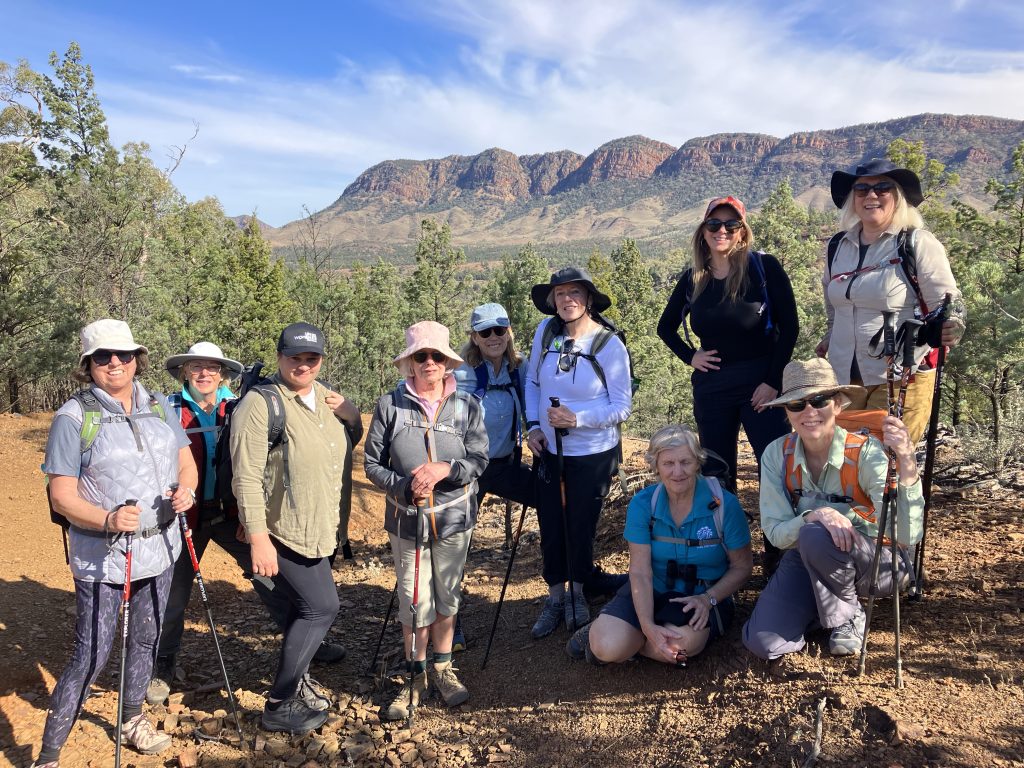
Particularly in Australia’s harsh UV climate, sun protection is a must have. On many walks you’ll need two hats – a hat for sun protection and a hat for warmth. Whether in sunny or cloudy conditions, a sun hat (preferably with a broad brim) is essential when you are spending a full day outdoors. A beanie or warm hat is important to keep you warm in cooler weather and avoid risks of exposure to extremities. Wool or synthetics are the best materials.
Socks and Gloves
A good padded pair of hiking socks is a good investment to keep your feet comfortable. Some people like to wear a lightweight pair of socks under their thicker socks – this ‘sock liner’ helps to keep feet dry and prevent rubbing and blisters. Likewise, gloves or mittens are a great bonus in chilly conditions to keep hands and fingers warm.
Gaiters
Gaiters are lower-leg protectors that cover the top of your boot and your lower leg. They are often used in wet weather, muddy conditions, scratchy undergrowth, or for snake protection. They are not necessary for many day walks on established trails. However, for those choosing to hike in shorts rather than long pants (which afford some protection) gaiters are a sensible form of additional protection.
Sunglasses and Protective Eyewear
Particularly in sunny and bright conditions, a good pair of sunglasses will protect your eyes from the potentially harmful effects of UV. They also provide (like normal glasses) a level of physical eye protection from foreign objects, particularly when walking through scrub and bushes. For best protection from UV, wrap around glasses with peripheral cover are the most effective.
And Don’t Forget to Slip, Slop and Slap
Whether you are hiking the alps, the coast or anywhere in between, regardless of season, you should always carry and apply appropriate sunscreen protection. And remember to keep it easily accessible so you can regularly reapply. Sunburn really can spoil an otherwise great trek.
Common Clothing Mistakes to Avoid
Most discomfort on walking holidays comes from a few simple mistakes. These include:
- Wearing brand-new shoes is the most common issue, followed by overpacking clothing you don’t need.
- Cotton-heavy clothing can also cause discomfort by holding moisture and chilling down fast, especially on longer walking days.
- Keeping clothing simple, functional, and tested before your trip makes a significant difference to overall comfort – so don’t try new gear for the first time or over complicate things. Keep it simple and reliable.
Frequently Asked Questions for What to Wear Hiking or Walking in Australia
Do I need special clothing for hiking in Australia?
Not necessarily. Comfortable, breathable clothing that allows movement is more important than specialist gear. Layering is key because conditions can change throughout the day.
Are hiking boots required for guided walking tours?
Not always. Many walkers prefer well-fitted hiking shoes or trail runners. The most important factor is comfort and ensuring footwear is properly broken in before your walk.
What should I avoid wearing on a walking holiday?
Cotton-heavy clothing is best avoided as it holds moisture and dries slowly. New or untested shoes are also a common cause of discomfort on longer walks.
How many layers should I wear?
A simple three-layer system works best: a base layer, a mid layer for warmth, and a waterproof outer layer. This makes it easy to adjust as conditions change.
Do I need different outfits for each day? No. Most walking holiday clothing is designed to be worn across multiple days with small variations. Function, comfort, and practicality matter more than outfit changes
A Final Note
What you wear on a guided walking or hiking holiday in Australia doesn’t need to be complicated. Comfort, layering, and practicality matter far more than technical gear or specialist clothing. When your clothing works with the environment rather than against it, the experience becomes easier, more enjoyable, and far more immersive and special.
If you are ready to take the next step, explore all our beautiful Park Trek Guided and Fully Supported Walks across Australia. walks. We hope you found this updated blog valuable and if you have any other questions contact our team.
You can find even more detailed and valuable information in our Get Hiking Ready article (link here), and the walkers tips and tricks section of our website. You might also find of value this post on similar topics from the team at We Are Explorers.
Happy Walking,
Charles & The Park Trek Team
Park Trek acknowledges and pays its respects to the Traditional Owners of the lands upon which we wander as a walking company. We recognise the unique place held by Aboriginal and Torres Strait Islander peoples as the original custodians of the lands and waterways across our continent, with histories of continuous connection dating back more than 60,000 years. We are proud to live on the planet’s oldest continent with the oldest continuous living culture. We support the Uluru Statement from the Heart.